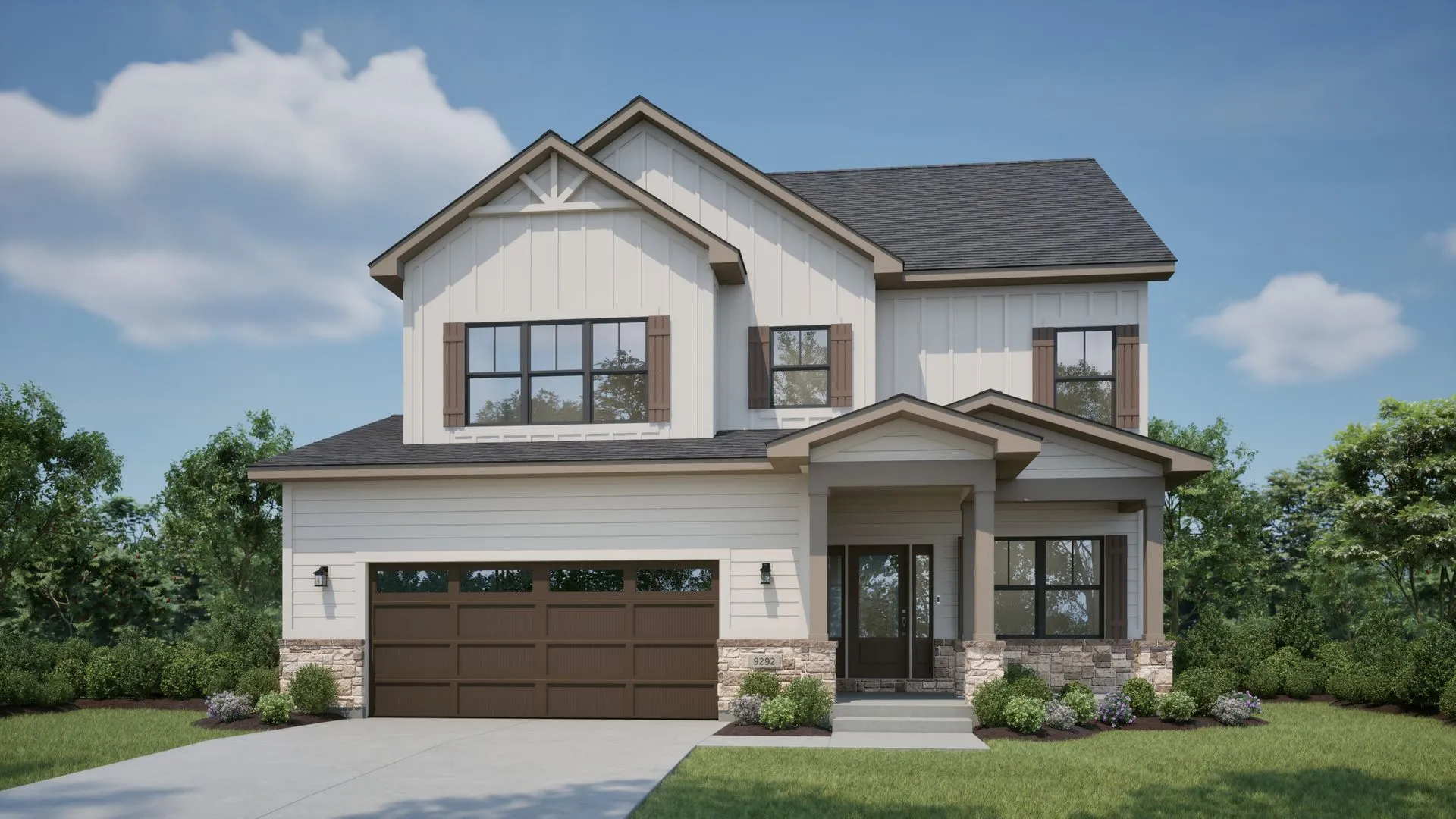


The Next Generation of a Family Business
For 34 years, Denlinger & Sons Builders has been building quality custom homes in Miami County, Ohio. Todd Denlinger's parents built the company, built its reputation, and handed him a name that meant something in the region. No two plans alike. No shortcuts. When Todd officially took over in 2020, months before COVID hit, he inherited both the business and the obligation to protect what it stood for.
The years that followed changed the economics of homebuilding. Material costs surged. Labor climbed. The price of a fully custom home moved out of reach for buyers in the $400,000–$600,000 range. Todd watched that market go underserved. In 2024 he launched Legacy Design Homes, a semi-production brand built to deliver the Denlinger quality standard to a broader group of buyers through a more scalable process.
"Quality is our number one core value. It's what our name has stood on in this area for over 30 years. When clients build a Legacy home, it's not a whole lot different than a custom home from Denlinger. It's just that the price is exposed up front."
— Todd Denlinger, President & Owner, Legacy Design Homes
Legacy Design Homes wasn't created to be the cheapest builder in the market. It was created to bring custom-level care into a more scalable model. But to do that, Todd needed more than a new brand. He needed a system to support it.
Legacy Design Had a Market. It Didn't Have a System.
Legacy Design launched before every process was fully defined. Plans came from different designers in different formats. Options weren't standardized. Pricing wasn't always available at the first meeting. A buyer would come in, point to one plan, ask for pieces of another, and suddenly the conversation looked a lot like a custom design session.
"We had unlimited plans. A client would come in and we'd try to morph this plan into that plan. We were just spinning our wheels, doing custom work with just different products."
— Todd Denlinger, President & Owner
That created problems across the business. Sales had to describe homes buyers couldn't see. Operations worked from plans that kept changing. And everything that had to happen before construction could begin: documentation, permits, pricing. It fell on a lean team doing it largely by hand.
The Bottleneck Before the Build
For Andy Draving, Legacy's Operations Manager, the problems started before construction and followed the home all the way into the field. Every home required a full documentation package built from scratch: electrical plans, flooring maps, quote breakdowns, permit-ready materials. Every outlet labeled. Every flooring transition mapped. And because plans weren't locked down, what made it into the field wasn't always what had been sold. When a plan quietly lost a closet between design and build, the first person to notice was often the homeowner pointing at a brochure that still showed it.
"Prior to Higharc, I would get a master plan and it would take me anywhere from 5 to 10 hours per house, going through and marking it out, creating an electrical, creating a flooring map, creating quotes, getting it permit-ready."
— Andy Draving, Operations Manager, Legacy Design Homes
The design cycle compounded the delay. After a buyer meeting, plans were redlined and sent to an outside drafter. Weeks later, revised plans would come back for review. More changes often followed. A process that should have taken days stretched to three or four weeks. For a growing builder, that delay pushed starts into the next quarter, and start delays don't just slow drafting, they slow revenue.
Looking for a Better Way
Todd first encountered Higharc in October 2024 through his NAHB Builder 20 group, where several builders he respected were already using the platform. He came looking for plan management, a way to bring Legacy Design's portfolio under one system. By January 2025, Legacy Design Homes was running on Higharc full-time.
"I wanted to get our whole portfolio of plans put together under one umbrella. That was really the key reason we moved to Higharc. If that's all Higharc did, that would be phenomenal. But it's leaps and bounds over that."
— Todd Denlinger, President & OwnerOne Plan Library. Every Department.
Today, Legacy Design's portfolio is centralized in Higharc: a dozen plans with set options, defined budgets, and pricing available at the first sales visit. That standardization changed how every part of the business operates.
In sales, what used to take three to four weeks of back-and-forth design revisions now happens in a single client meeting. In operations, Andy's pre-sale prep time dropped from 5–10 hours per home to 2–3 hours. Lot-specific construction documents are generated automatically from homeowner selections. In design, a new plan that once took one to two months through an outside drafter can now be built out in Studio and moved toward production in a week.
"Being able to spend less time with draftsmen, architects, designers. Higharc really allows me to spend time where my time should be spent: working on the business, not in the business."
— Todd Denlinger, President & Owner
From Contract to Start, Without the Wait
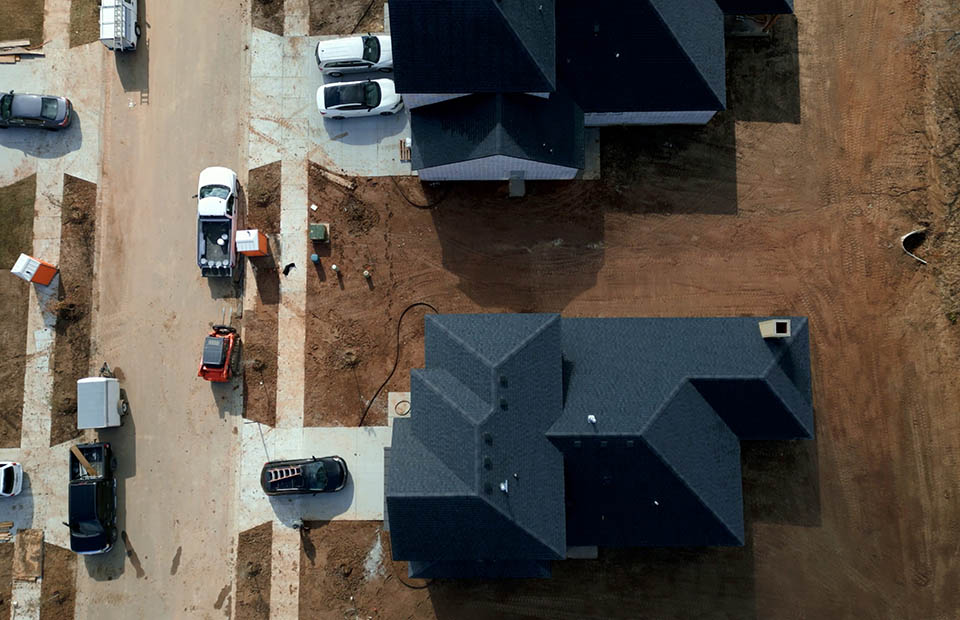
The impact compounds after the sale. Before Higharc, turning a contract into a construction-ready set of plans could take three to four months. Todd can see both tracks running right now: Higharc plans move to pre-construction the same week as the sale; plans still going through an outside drafter take months. The math is simple and the consequences are real.
"If we sell 40 homes and we're able to get one started in a week with Higharc. If we went back to our old way, it would take us three to four months sometimes before we could get a shovel in the ground. You're wondering why you only started 25 of the 40 you sold this year."
— Todd Denlinger, President & Owner
For Andy, the same system that eliminated the documentation grind also fixed the field problem. When dimensions, fireplace openings, and room sizes match every time, trades build faster with fewer questions. Vendors build routines. And Legacy can still offer personalization. It just happens within a system, not outside of one.
"Higharc has been instrumental because it simplifies our business. I no longer have to check that every plan matches. Now we have something to show homeowners and to stand behind."
— Andy Draving, Operations Manager, Legacy Design Homes
And because the same standardized plans reach the field, Legacy can still offer the personalization that differentiates it, without sacrificing the consistency that makes a production model work.
"Higharc allows us to still make the personalized changes homeowners want and put them on the plans, but we still have the consistency house to house. It's the best of both."
— Andy Draving, Operations Manager, Legacy Design Homes
What Buyers Couldn't See
Legacy Design offers twelve floor plans but only has one model home. Before Higharc, that's a gap Taja Salley, Legacy's Sales Manager, had to bridge every day, using photos, 2D drawings, homes under construction, and a lot of asking buyers to imagine.
"In order to really show somebody what they can buy without them being able to touch the product: it is challenging. You have to use photos, walk them through homes under construction, ask them to imagine a lot."
— Taja Salley, Sales Manager, Legacy Design Homes


.png)
.png)





.png)