

For decades, residential construction documents have been created to satisfy permitting requirements and support pricing. But the people who rely on them most — construction managers, trades and suppliers — rarely receive documents designed for jobsite execution.
The result is a persistent gap between the back office and the field. Plans often contain dense notes and incomplete installation guidance, forcing jobsite teams to interpret information before they can move forward.
In this blog post, I explain why traditional construction documents break down in the field and why the problem continues across much of the industry. I also discuss what changes when builders begin designing jobsite-ready plans specifically for the people building the home: clearer communication, fewer field questions, less rework and more predictable construction schedules.
Construction plans are designed to permit, not to build
Today’s plans are built to permit, not to build. They’re dense, complex and often inconsistent. They serve as repositories of information rather than job-ready instructions for construction execution. The result is a growing disconnect between back-office architecture and drafting (A&D) teams — and field teams who are the true end users of the plans.
The problem: inadequate end-user information
Back-office teams rarely spend enough time in the field to see where plans break down in real-world execution or to incorporate that field feedback into future plan sets.
As a result, plans contain:
- Excess contextual information, much of it irrelevant or incorrect for the build
- Not enough critical execution detail, such as manufacturer-specific requirements, framing dimensions, visual installation guidance or finished-condition expectations
Construction plans rely on dense notes and interpretation, oftentimes in a non-native language. This forces field teams to guess, stop work or make dry runs to homes that aren’t job-ready, which leads to rework, schedule delays and unnecessary costs. Over time, construction managers often spend more of their energy putting out fires than leading the construction process and scaling their impact across multiple homes.
Why the homebuilding industry hasn’t fixed this problem
Several structural realities in the homebuilding industry make this problem difficult to solve.
1. Leadership is insulated from the pain
Executives aren’t on the front line and don’t experience the daily chaos caused by inefficient plans. When issues surface, the blame often lands on the construction manager, even when the root cause lies in the system that failed them.
Cost variance is especially underreported. Overruns on a single home frequently exceed 1% of construction cost, but those numbers get buried, often because incentives are tied to keeping them low. Lost time is even harder to track.
The economics of homebuilding make the impact clear:
- Construction costs are typically ~60% of the sales price (NAHB).
- With an average new home price of around $500K, margins are already tight.
- Builder financial teams estimate losses of hundreds of dollars per day related to construction delays.
- One week lost to rework and dry runs can exceed $2,000 per home, before accounting for direct construction cost variance.
Multiply that across a community — or a year — and the cost quickly becomes material.
2. A&D teams are busy, comfortable and defensive
A&D teams take pride in their plans — and rightly so. But they’re also trapped in a reactive cycle:
- Pushing plans out for new starts
- Supporting land deals
- Responding to downstream changes
This “death by a thousand cuts” leaves no time to step back, collaborate with the field or rethink how plans support construction execution. The irony is that this busyness prevents the alignment that would dramatically reduce downstream chaos.
This is where newer tools are starting to make a difference. Modern product lifecycle management platforms like Higharc allow A&D teams to work proactively, automate change and focus more on construction enablement.
3. An antiquated industry is running out of levers
Homebuilding is an old industry, and core processes have barely changed, even as customer expectations, product complexity, labor constraints and costs have skyrocketed.
Lot costs and construction costs will continue to rise, and pricing has a fixed ceiling. That leaves operational efficiency as one of the few remaining levers builders have to increase gross profit and net margin.
And yet many builders still rely on documentation practices that were never designed for today’s scale or workforce.
Construction enablement starts with jobsite-ready construction documents
When plans are reimagined as job-ready execution tools, they significantly increase the effectiveness and coordination of construction operations.
Right-sized, home-specific, visual-first construction instructions — augmented with manufacturer visuals, QR-linked 3D details and videos, and clear definitions of job-complete conditions — create a single source of truth for everyone on the jobsite.
Construction documents should deliver the right information to the right person at the right moment in a format they can immediately understand and execute.
What changes on the jobsite
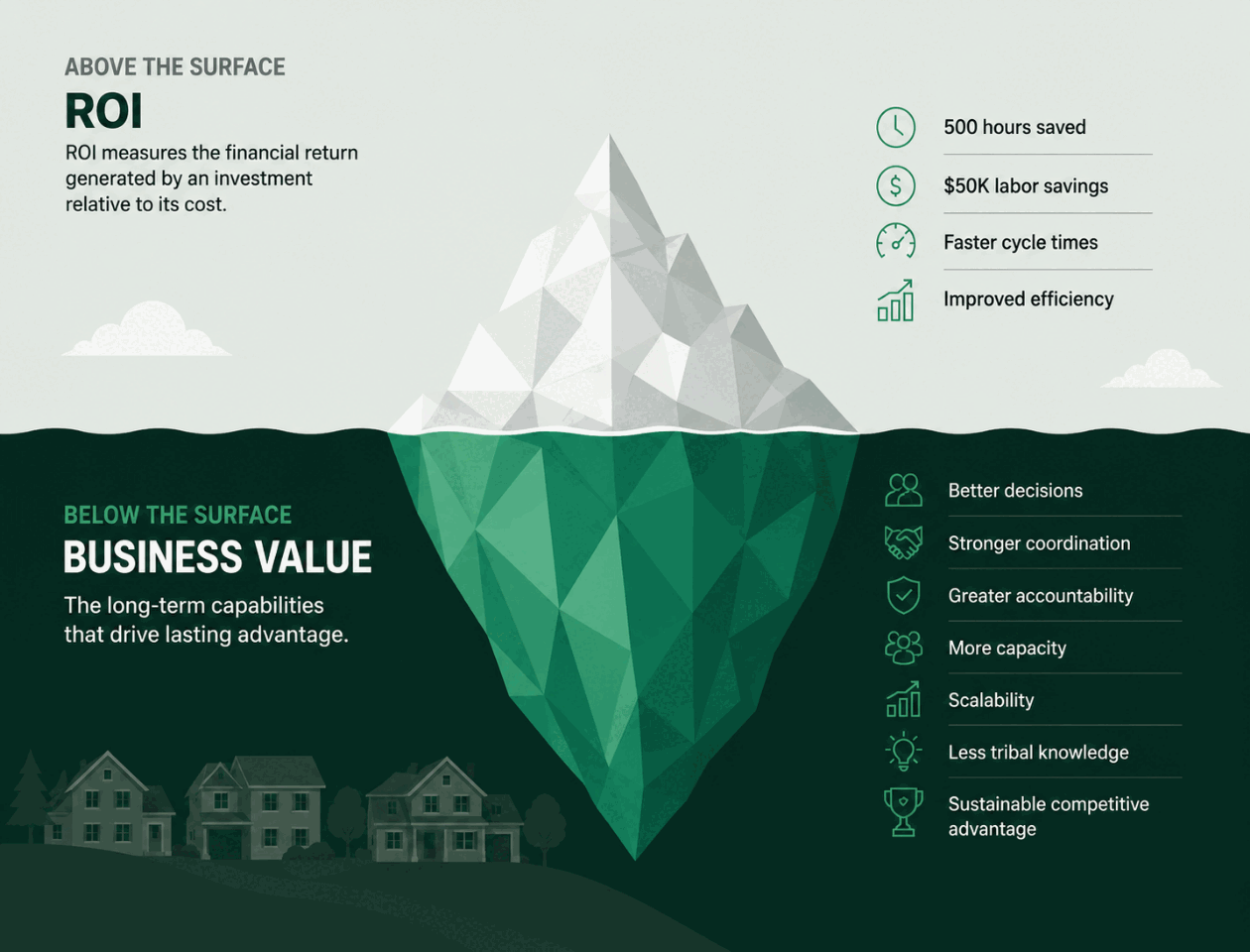
Builders who invest in clean, execution-focused construction instructions unlock measurable benefits:
- Faster, more predictable construction execution
- Fewer dry runs and fewer field questions
- Reduced rework and cost variance
- Shorter schedules and meaningful time savings
- Higher trade productivity
- Reduced warranty issues and higher CSAT scores
- Scalable construction management, allowing each construction manager to oversee more homes at a higher level
- Improved morale, accountability and clarity across the field
Most importantly, plans evolve from a static document into a true construction enablement system that supports homes from job-ready to job-complete.
Bottom line
The best construction documents read like the best instruction manual you’ve ever used: clear, visual, precise and impossible to misinterpret on the jobsite.
When plans are designed for construction execution by the people who use them, homebuilding becomes more predictable, more scalable and more profitable.
That’s the role of construction enablement. Builders who improve how work is communicated on the jobsite gain an operational advantage that extends well beyond land and capital.
FAQs
What makes construction documents jobsite-ready?
Jobsite-ready construction documents focus on construction execution and include clear installation guidance, visual details, manufacturer requirements and defined job-complete conditions that help field teams execute work without guesswork.
How do better construction documents reduce rework?
Clear construction plans reduce ambiguity during installation. When framing details, dimensions and manufacturer requirements are clearly documented, trades spend less time interpreting plans and fewer mistakes occur during construction.
What is construction enablement in homebuilding?
Construction enablement refers to designing construction documentation and workflows that help field teams execute work efficiently. When plans are structured for jobsite execution, builders can reduce delays, improve trade productivity and scale construction management.
See Higharc in action
Discover how Higharc can empower your team to conquer change, modernize your buyer experience, and decrease cycle times.
Book a demo
.png)



.png)
%20(1260%20x%20960%20px).jpg)



.png)


.jpg)


%20(1260%20x%20960%20px).jpg)

.jpg)

.jpg)


