
Quantity takeoff accuracy directly affects pricing, purchasing and profitability. In our testing of several plan-scan AI estimating tools, we repeatedly saw the same types of errors: missed openings, scale miscalibration and double-counted shared elements. Misread pocket doors and cased openings added around $420 per occurrence, while a 20% scale error produced a $2,160 framing underestimate on a single home.
These errors stem from how plan-scan estimating works. Plan-scan AI estimating tools interpret the 2D drawing and use that interpretation to calculate quantities directly. When the system misreads a line, opening or scale, the error carries into the takeoff.
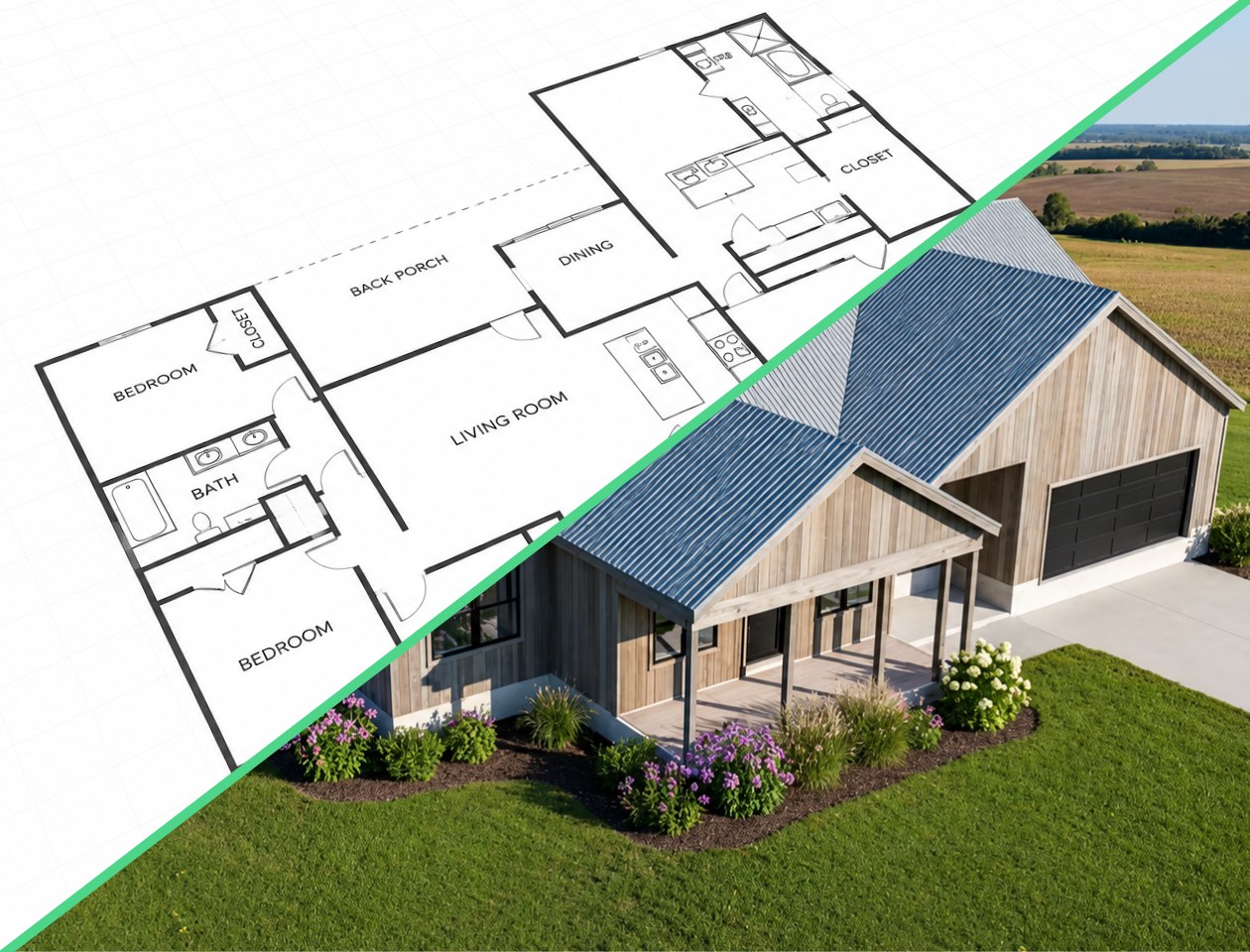
Higharc inserts a structured 3D model between the drawing and the takeoff. AI helps create that model, an estimator can review and edit it, and customizable estimating rules are applied to the verified model data. Takeoffs are then calculated mathematically from the dimensions, geometry and relationships in that model.
Why plan-scan AI produces estimating errors
Before plan-scan AI can produce a takeoff, the system has to determine what different lines and symbols mean, whether the drawing is calibrated correctly and how to treat shared elements such as walls between rooms.
When those interpretations are wrong, the errors carry into the takeoff. Because these tools move directly from the drawing to material quantities, estimators have limited visibility into how an item was quantified and limited ability to adjust the estimating logic behind it.
3 plan-scan AI estimating errors and what they cost
Missed openings
Plan-scan AI can misread pocket doors and cased openings because they aren’t represented like conventional swing doors. In testing, one system treated these openings as continuous wall and added about $420 in framing and drywall per occurrence.
Scale errors
An AI tool misread the drawing scale, causing every downstream quantity to come in 20% short. For the exterior wall framing package, the estimate came to $8,640 instead of $10,800 — a $2,160 underestimate:
Double-counted shared elements
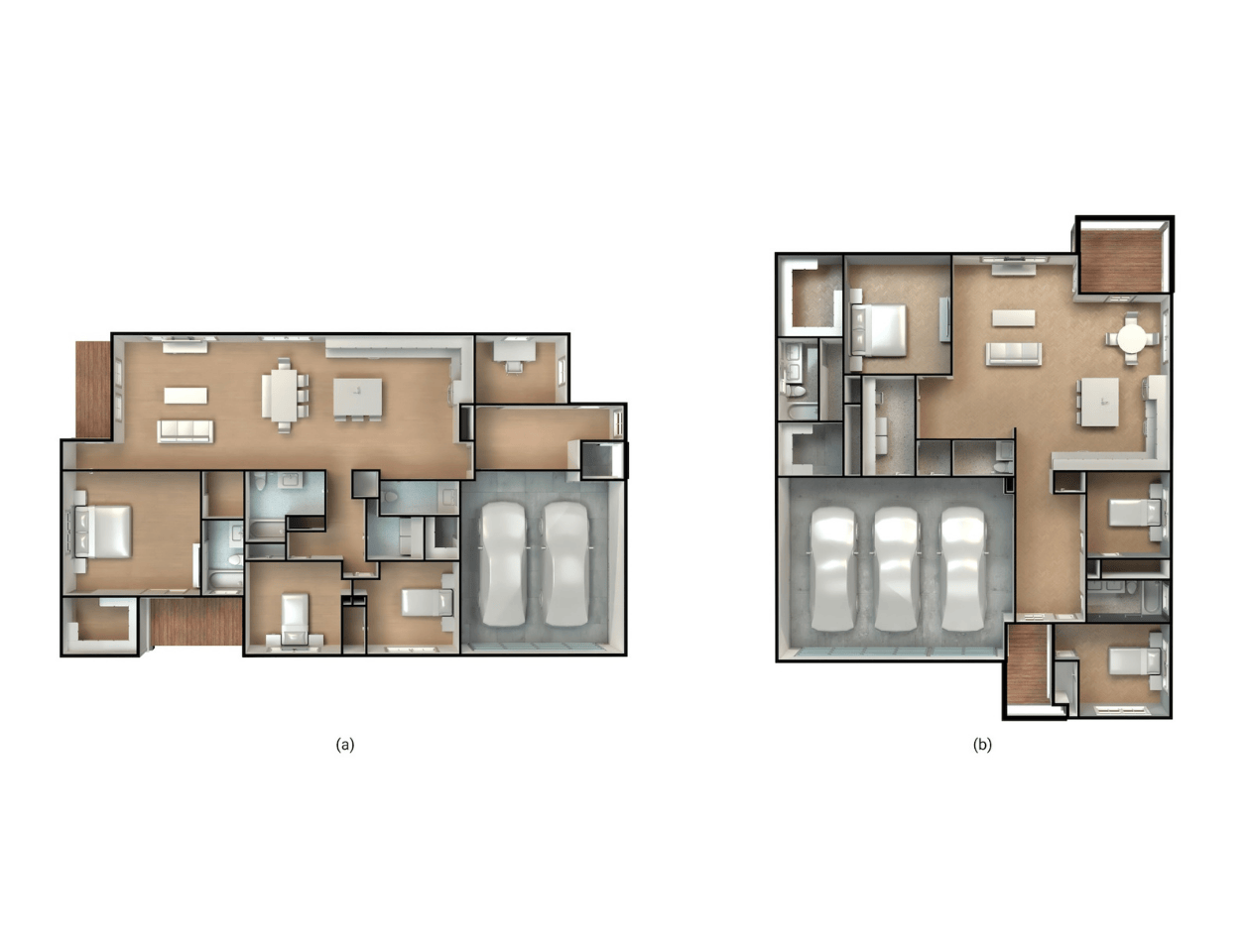
When one tool processed adjoining rooms independently, it counted the shared wall twice. That produced 76 studs instead of 68, an 11.8% framing overcount, plus 126 square feet of phantom drywall, worth about $315 per shared wall at an installed cost of $2.50 per square foot.
Higharc keeps estimators in the loop, not in the dark
Higharc avoids takeoff errors by using a human-in-the-loop AI workflow to create an accurate 3D model that’s verified by the estimator. Takeoffs are then calculated based on estimating logic defined by your business — not an AI black box.
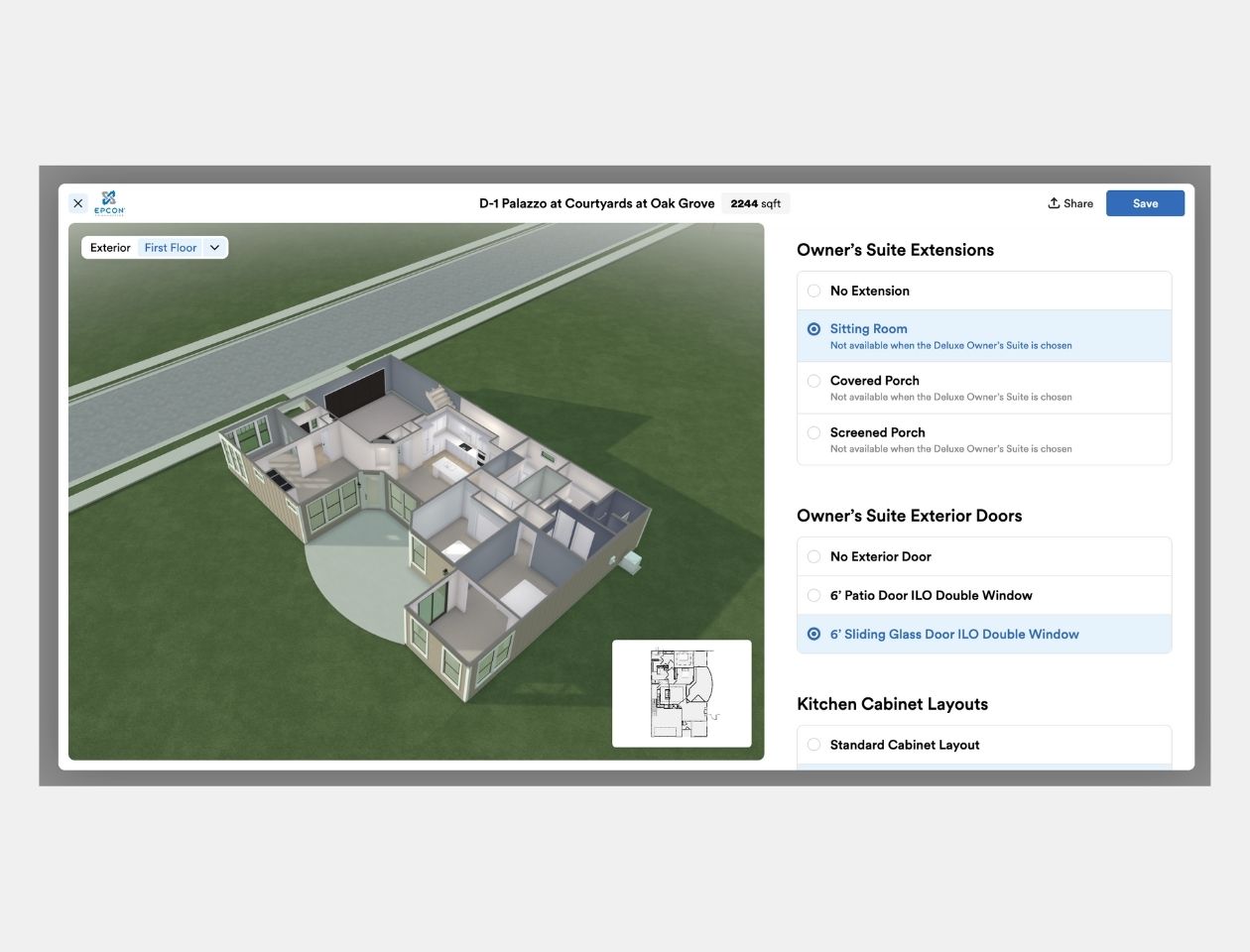
Here’s a brief overview of how it works: a human estimator uploads the 2D plan and verifies key elements of the plan like the scale and plate height. Higharc then uses AI to identify and place building elements such as walls, rooms and openings. Our AI outputs a dynamic 3D model that can be reviewed, edited and validated by the estimator. From there, the takeoff is calculated mathematically from the structured data in the 3D model using fully customizable estimating logic.
Watch this video to see how Higharc turns 2D plans into structured building data for quantity takeoffs:
How quantity takeoff accuracy affects pricing, margin and revenue
Accurate quantity takeoffs shape pricing, purchasing and margin decisions across the business.
For homebuilders: better pricing and margin visibility
For homebuilders, accurate and current estimates provide a more reliable basis for pricing homes, evaluating new product and understanding projected margin. Higharc keeps takeoff quantities tied to the home model, so when the design changes or options are updated, the estimate can be regenerated from the latest version rather than requiring another scan and round of tracing.
That also reduces estimator rework. Instead of rebuilding takeoffs each time a plan or option changes, estimating teams can work from the updated model and use the same estimating logic across different configurations of the home.
For building materials distributors: standardized estimation logic, stronger quotes and more revenue per job
For distributors, Higharc's estimating engine supports detailed material estimating at the SKU level, helping teams move from PDF drawings to detailed material packages with less manual reconstruction.
Additionally, standardized estimating logic gives multi-location distributors a consistent way to turn building measurements into material quantities across branches and markets. Instead of each location relying on its own spreadsheet, formulas or estimating conventions, teams can apply the same methodology across the organization while accounting for location-specific needs when required, such as item SKUs, regional construction practices and code requirements.
Structured building data can also support takeoffs for multiple material categories from the same 3D model. A supplier quoting lumber, for example, can also quote drywall, roofing or doors without starting each takeoff from scratch, increasing the opportunity to sell more of the total material package.
Where AI belongs in the estimating workflow
The key question for builders and suppliers is which parts of the workflow should rely on AI and which should rely on verified data and deterministic logic. Higharc’s approach leverages AI to accelerate model creation and calculates material quantities from that structured building data, using standardized, customizable logic that is verifiable by human estimators.
We’ll break down Higharc’s estimating workflow for distributors in detail in an upcoming blog.
Expand estimating capacity
Discover how Higharc helps your team handle more quotes, standardize estimating logic across locations and expand into new material categories and markets.
Get a demo
See Higharc in action
Discover how Higharc can empower your team to conquer change, modernize your buyer experience, and decrease cycle times.
Book a demo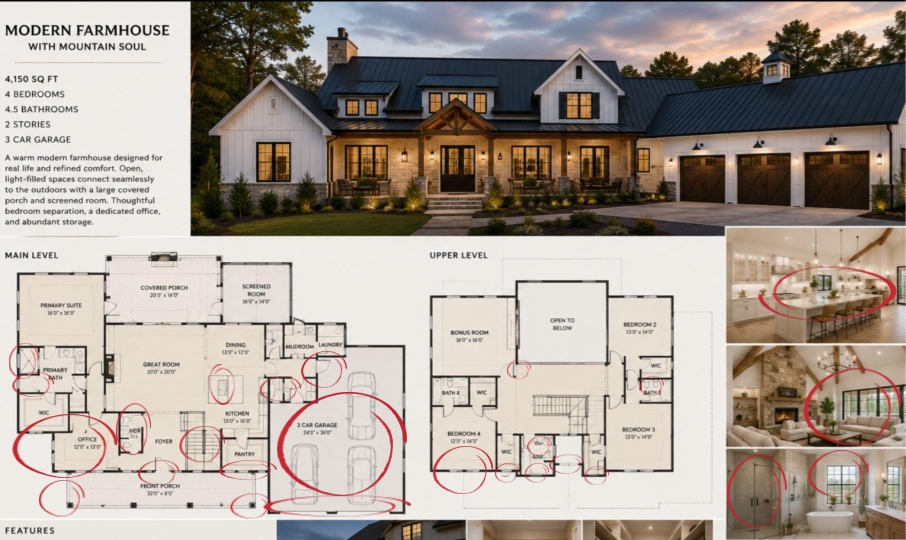
.png)




.png)
%20(1260%20x%20960%20px).jpg)



.png)


.jpg)


%20(1260%20x%20960%20px).jpg)

.jpg)

.jpg)


